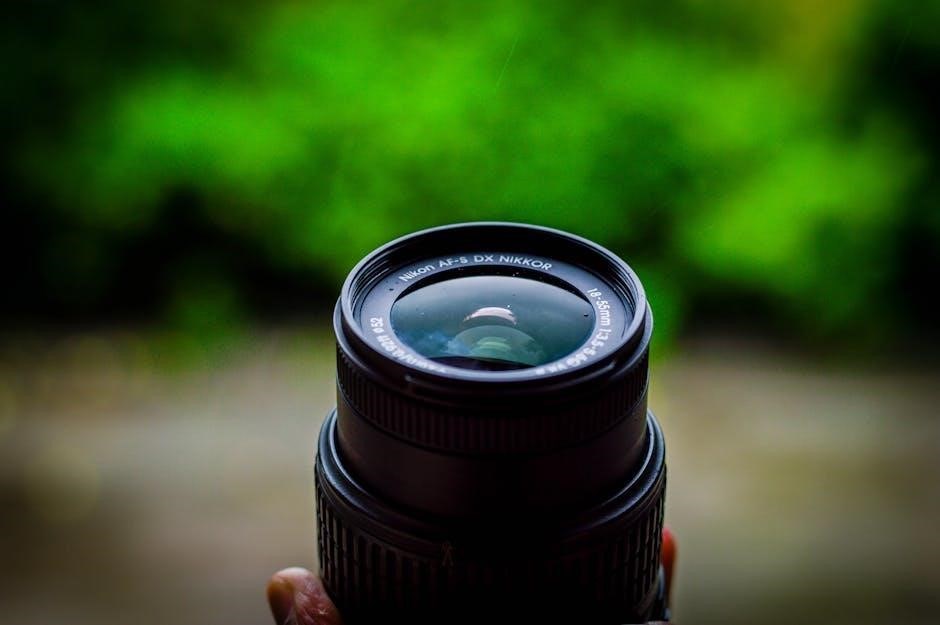
The Nikon D3100 manual guides users through maximizing their camera’s potential, offering a comprehensive overview for beginners and enthusiasts alike.
It’s designed to help you quickly understand and utilize all features.
What is the Nikon D3100?
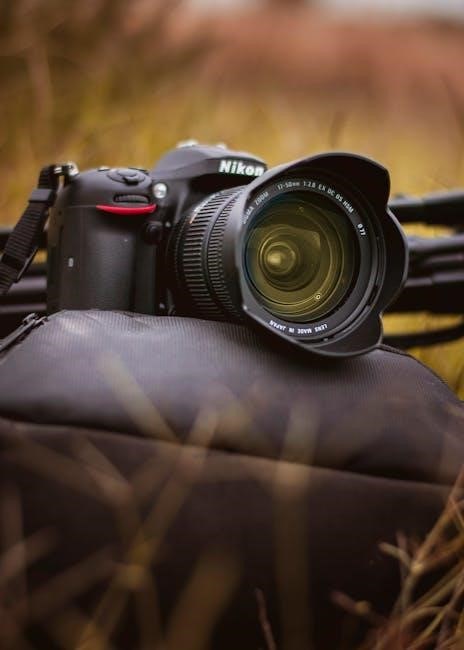
The Nikon D3100 is a digital single-lens reflex (DSLR) camera renowned for its user-friendly design, making it an excellent entry point into the world of professional photography. As highlighted in various manuals and online resources, it’s designed to help new photographers learn the fundamentals.
The camera’s accompanying manual serves as a crucial resource, offering detailed instructions on setup, operation, and troubleshooting. It’s a tool to unlock the camera’s full potential, guiding users through its features and settings. The D3100 provides a significant step up from point-and-shoot cameras, offering greater control and image quality.
Key Features and Specifications
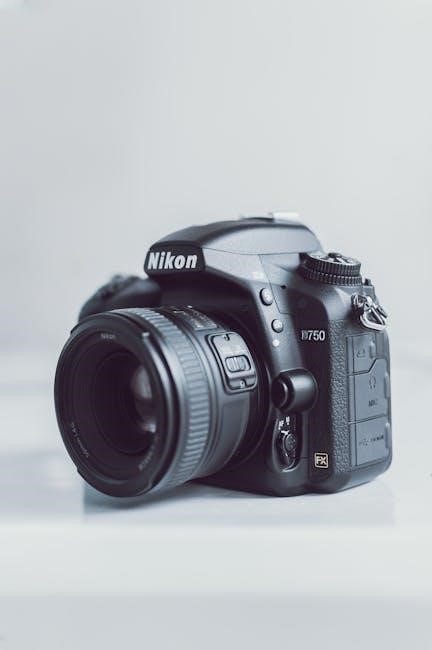
The Nikon D3100 boasts a 14.2-megapixel DX-format CMOS sensor, delivering high-resolution images with excellent detail. The manual details its 11-point autofocus system, ensuring sharp focus on subjects. It features Full HD 1080p video recording capabilities, allowing for stunning video content.
Key specifications include an ISO range of 100-3200 (expandable to 12800), a 3.0-inch LCD screen, and compatibility with Nikon’s DX-format lenses. The camera’s guide mode, explained in the manual, assists beginners in understanding camera settings. It’s a compact and lightweight DSLR, ideal for travel and everyday photography.
Getting Started with Your D3100
The Nikon D3100 manual provides step-by-step instructions for a smooth setup, from unboxing to initial configuration, ensuring a quick start to your photography journey.
Unboxing and Initial Setup
The Nikon D3100 manual begins with a detailed unboxing experience, listing all included components – camera body, kit lens, battery, charger, USB cable, and documentation.
Initial setup involves carefully removing packaging, inspecting for damage, and connecting the battery for a preliminary charge. The manual emphasizes proper handling of the camera and lens.
It guides users through attaching the lens, ensuring a secure fit, and provides clear illustrations. Before powering on, the manual advises reviewing safety precautions and understanding basic camera functions. This foundational step sets the stage for a successful photographic experience.
Inserting the Battery and Memory Card
The Nikon D3100 manual provides step-by-step instructions for inserting the battery, highlighting the correct orientation and a reassuring ‘click’ to confirm secure placement. It stresses using only Nikon-approved batteries for optimal performance and safety.
Next, the manual details memory card insertion, specifying compatible card types (SD, SDHC, SDXC). It illustrates the card slot location and proper insertion direction, preventing damage.
The guide emphasizes formatting the memory card within the camera for best compatibility and performance. Proper battery and card installation are crucial first steps, enabling the camera’s functionality.
Understanding the Camera Controls
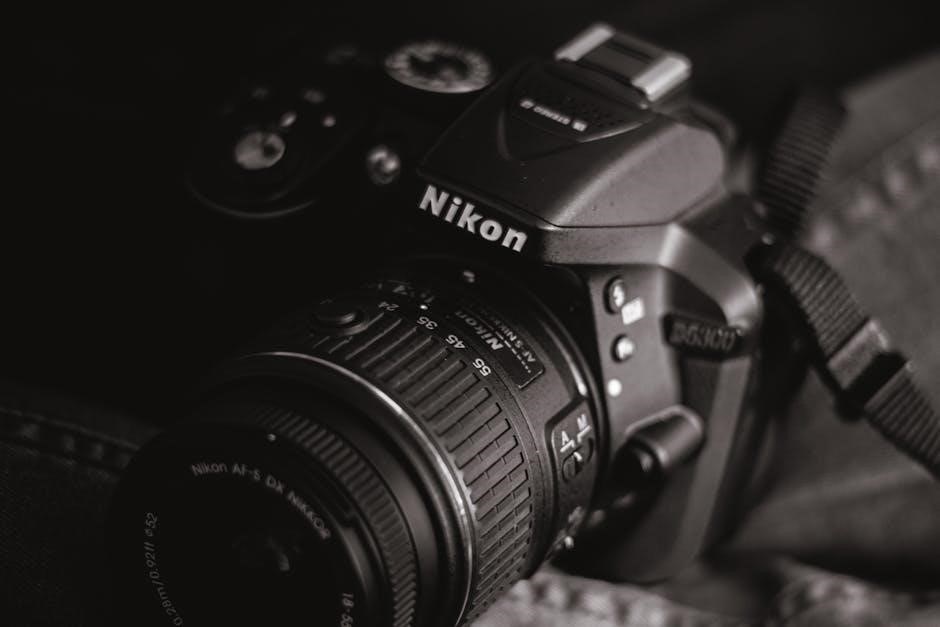
The Nikon D3100 manual meticulously details each camera control, beginning with the power switch and shutter button. It explains the function dial, outlining its various shooting modes – Auto, Scene, P, S, A, and M – and their respective uses.
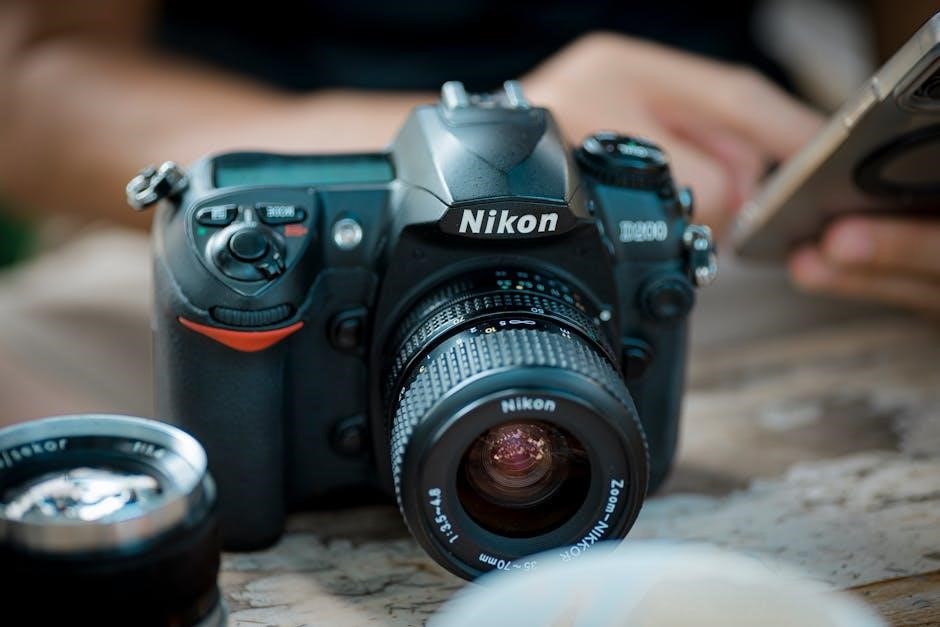
The manual clarifies the purpose of the directional pad for menu navigation and settings adjustments. It also covers essential buttons like the ‘i’ button for quick access to frequently used settings and the playback button for reviewing images.
Diagrams and clear labeling aid in understanding the physical layout, ensuring users can confidently operate the D3100.
Shooting Modes Explained
The Nikon D3100 manual details various shooting modes, from fully automatic options for beginners to more advanced, semi-manual controls for experienced photographers.
Auto Mode for Beginners
The Nikon D3100 manual emphasizes Auto mode as the simplest way to start taking pictures. In this mode, the camera automatically selects all settings – aperture, shutter speed, ISO, and white balance – optimizing them for the scene.
This is ideal for users unfamiliar with photographic principles, allowing them to focus on composition and capturing the moment. The manual explains that Auto mode is suitable for everyday snapshots and general photography. It’s a fantastic starting point for learning, as it removes the complexity of manual adjustments.
Simply point and shoot, and the D3100 handles the technical aspects, delivering well-exposed images in most situations.
Scene Modes: Portrait, Landscape, Sports
The Nikon D3100 manual details several Scene modes designed for specific shooting situations. Portrait mode utilizes a wider aperture to blur the background, emphasizing the subject. Landscape mode prioritizes sharpness and depth of field, ideal for expansive views. Sports mode employs a faster shutter speed to freeze motion, capturing action effectively.
The manual explains how each mode pre-configures camera settings for optimal results in those scenarios. These modes offer a step up from full Auto, providing more control without requiring extensive photographic knowledge. They are excellent for beginners wanting to experiment and achieve better results in common shooting situations.
Program (P) Mode: Semi-Automatic Control
The Nikon D3100 manual clarifies that Program (P) mode offers a balance between automatic convenience and manual control. In P mode, the camera automatically sets both aperture and shutter speed, but allows the photographer to adjust ISO, white balance, and exposure compensation.
This mode is ideal for users wanting more creative input than Auto mode provides, without the complexity of fully manual settings. The manual emphasizes P mode’s versatility, enabling quick adjustments to suit varying lighting conditions and artistic preferences. It’s a stepping stone towards mastering full manual control, offering a comfortable learning experience.
Focusing and Exposure
The Nikon D3100 manual details autofocus modes and exposure settings, explaining aperture, shutter speed, and ISO for optimal image capture and creative control.
Autofocus Modes: Single, Continuous, Auto
The Nikon D3100 manual thoroughly explains the three autofocus (AF) modes. Single-servo AF (AF-S) is ideal for stationary subjects, locking focus when the shutter button is half-pressed. Continuous-servo AF (AF-C) tracks moving subjects, continuously adjusting focus as they move – perfect for sports or wildlife.
Auto-servo AF (AF-A) automatically selects between AF-S and AF-C, attempting to determine the subject’s motion. The manual emphasizes choosing the correct mode for the situation to achieve sharp, in-focus images. Understanding these modes is crucial for capturing clear photos, especially when dealing with dynamic scenes or subjects.
Understanding Exposure: Aperture, Shutter Speed, ISO
The Nikon D3100 manual details the “exposure triangle”: aperture, shutter speed, and ISO. Aperture controls the lens opening, affecting depth of field – a wider aperture (lower f-number) creates shallow depth, blurring backgrounds. Shutter speed determines how long the sensor is exposed to light; faster speeds freeze motion, while slower speeds allow more light in.
ISO measures the sensor’s sensitivity to light; higher ISOs are useful in low light but can introduce noise. Mastering these settings, as explained in the manual, allows photographers to control the brightness and overall look of their images.
Exposure Compensation: Brightening and Darkening Images
The Nikon D3100 manual explains exposure compensation as a tool to fine-tune brightness. When the camera’s meter is fooled by bright or dark scenes, compensation adjusts the exposure. Positive values (+1, +2) brighten the image, useful for dark subjects, while negative values (-1, -2) darken it, ideal for bright scenes like snow.
This feature overrides the camera’s automatic settings, giving you creative control. The manual emphasizes practicing with exposure compensation to achieve desired results, ensuring properly exposed photos in challenging lighting conditions.
Working with Menus and Settings
The Nikon D3100 manual details navigating the camera menu for customization. Users can adjust image quality, size, and various settings to personalize their shooting experience.
Navigating the Camera Menu
The Nikon D3100 manual explains that accessing the camera’s menu is done via the ‘Menu’ button located on the rear panel. This opens a tabbed interface, categorized for shooting, playback, setup, and custom settings.
Using the directional pad allows you to move between menu options and settings. Pressing the ‘OK’ button selects the highlighted option. The manual emphasizes understanding each tab’s function – shooting for image settings, playback for reviewing photos, setup for general camera configurations, and custom settings for personalized controls.
The manual also advises carefully reviewing each setting to fully grasp its impact on image capture and camera operation, ensuring optimal performance and a tailored shooting experience.
Customizing Camera Settings
The Nikon D3100 manual details extensive customization options within the ‘Custom Settings’ menu. Users can personalize autofocus behavior, metering methods, and image quality settings to match their shooting style.
The manual highlights the ability to adjust button functions, display settings, and even the camera’s startup screen. It encourages experimentation with these settings to create a workflow that feels intuitive. Customizing settings like image review time and beep sounds enhances the user experience.
The manual stresses saving preferred settings as a ‘User Preset’ for quick recall, streamlining the process for consistent shooting conditions.
Image Quality and Size Settings
The Nikon D3100 manual thoroughly explains image quality and size options, crucial for balancing file size and detail. Users can choose from various JPEG compression levels, impacting image file size and quality.
The manual details the benefits of shooting in RAW format for maximum editing flexibility, though it results in larger file sizes. It clarifies Large, Medium, and Small image size settings, influencing the number of photos stored on a memory card.
Understanding these settings, as the manual guides, allows photographers to optimize their workflow based on intended use – web display versus large prints.
Advanced Features
The Nikon D3100 manual unlocks creative potential with features like flash control, white balance adjustments, and RAW image capture for enhanced editing.
Using the Built-in Flash
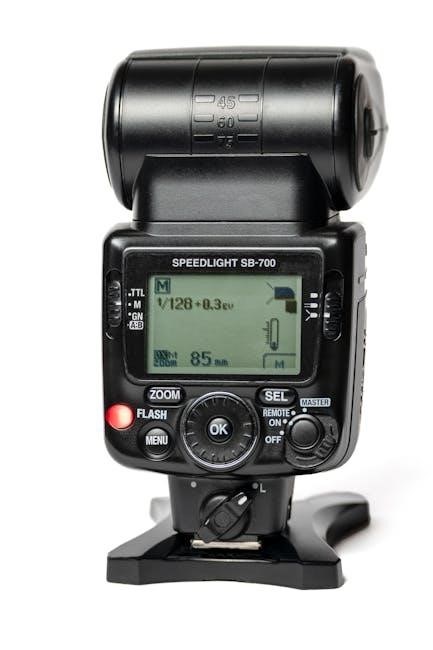
The Nikon D3100 manual details how to effectively utilize the integrated flash for various shooting scenarios. Understanding flash modes – Auto, Red-eye Reduction, Fill-flash, and Manual – is crucial. Auto mode lets the camera decide when flash is needed, while Red-eye Reduction minimizes that common issue.
Fill-flash adds light to shadowed areas in bright conditions, and Manual allows full control over flash intensity. The manual explains how to access flash settings through the camera menu, adjust flash compensation, and even utilize the flash as a secondary light source. Proper flash usage significantly improves image quality in challenging lighting situations, as outlined in the comprehensive guide.
Understanding White Balance
The Nikon D3100 manual thoroughly explains white balance, a critical setting for accurate color reproduction. Different light sources (sunlight, incandescent, fluorescent) emit varying color temperatures. White balance corrects these, ensuring whites appear white and colors are natural.
The manual details preset modes like Daylight, Cloudy, Tungsten, and Fluorescent, alongside a Custom mode for precise adjustments. Auto White Balance often performs well, but manual control is vital for challenging conditions. Incorrect white balance results in color casts – images appearing too warm (yellowish) or cool (bluish). Mastering white balance, as the manual instructs, is key to achieving professional-looking photos.
Shooting in RAW Format
The Nikon D3100 manual details the benefits of shooting in RAW format versus JPEG. Unlike JPEGs, which are processed images, RAW files contain unprocessed data directly from the sensor. This provides significantly greater flexibility in post-processing.
The manual explains that RAW files allow for extensive adjustments to exposure, white balance, and color without sacrificing image quality. While RAW files are larger and require editing software, they preserve maximum detail. The D3100 manual emphasizes RAW’s advantage for serious photographers seeking ultimate control over their images, enabling corrections beyond JPEG’s limitations.
Nikon Community and Support
The Nikon Club, detailed in the manual, offers online resources, forums, and meeting opportunities for Nikon D3100 users to connect and learn.
Nikon Club: Online Resources and Forums
The Nikon Club serves as a vibrant online platform dedicated to technical discussions and photographic exchange amongst Nikon enthusiasts. As highlighted within the Nikon D3100 manual, it’s a valuable resource for users seeking to enhance their skills and connect with fellow photographers.
The club provides a space for meeting and gatherings of Nikon users, fostering a strong community spirit. It caters to the needs of its members, offering a wealth of information and support. This digital hub encourages sharing of content and talent, particularly within the ever-evolving landscape of social media.
Members can find assistance, share their work, and participate in discussions related to the Nikon D3100 and other Nikon products.
Warranty Information and Service
Regarding the Nikon D3100, warranty coverage for products purchased in Italy, even if imported from Europe, legally provides two years of protection with valid certification and proof of purchase. This aligns with European law, ensuring consumer rights are upheld.
The Nikon D3100 manual doesn’t detail specific warranty terms, but directs users to official Nikon support channels for detailed information. Should service be required, it’s crucial to understand the implications of importing versus purchasing locally.
Nikon offers service options to address any issues, ensuring continued functionality of your camera. Always retain your purchase documentation for warranty claims.