Explosive workout programs, often found as a PDF guide, focus on developing rapid force production – crucial for athletic performance and power.
These programs blend plyometrics and complex training, enhancing jump height, sprint speed, and overall athletic explosiveness, offering a structured path to power.
What is Explosive Strength?
Explosive strength isn’t simply about how much force you can generate; it’s about how quickly you can generate it. This rapid force development is vital for athletic endeavors, impacting jump height, sprint speed, and reactive agility.
Unlike maximal strength, which focuses on the peak force output, explosive strength emphasizes the rate of force development (RFD). An explosive workout PDF will typically target this by incorporating exercises designed to overcome inertia and produce force in the shortest possible time.
Systematic reviews highlight that both plyometric training (PLT) and complex training (CT) are effective methods for improving explosive power in the lower limbs, focusing on jump ability and sprint ability. Essentially, it’s power – the combination of strength and speed – brought to its peak.
Why Use an Explosive Workout Program?
An explosive workout program PDF offers benefits extending beyond just athletic performance. While crucial for sports requiring jumping, sprinting, or rapid changes in direction, it also enhances everyday functional movements. Increased power translates to improved agility, balance, and reaction time.
These programs are valuable because they specifically target the nervous system’s ability to recruit muscle fibers quickly. Integrating one power-based movement per workout, followed by hypertrophy training, is a common and effective strategy.
Furthermore, a well-structured program, even with moderate volume, can significantly increase explosiveness without a high risk of injury, provided adequate recovery is prioritized. It’s about optimizing power output, not just building bulk.

Key Components of an Explosive Workout PDF
Explosive workout PDFs center around Plyometric Training (PLT) and Complex Training (CT), strategically combined to maximize power development and athletic potential.
Plyometric Training (PLT)
Plyometric Training (PLT) is a cornerstone of any effective explosive workout program, focusing on maximizing the speed and power of muscle contractions. It utilizes the stretch-shortening cycle – rapidly stretching a muscle followed by an immediate contraction – to enhance performance.
A key goal of PLT is Jump Ability Enhancement, achieved through exercises like box jumps and plyo Bulgarian split squats, improving vertical leap and reactive strength. Equally important is Sprint Ability Improvement, utilizing drills that mimic sprinting mechanics to increase stride length and frequency.
Systematic reviews confirm PLT’s effectiveness in boosting lower limb explosive power. Integrating PLT into a PDF workout plan provides a structured approach to developing these crucial athletic attributes, building power and speed.
Jump Ability Enhancement
Jump Ability Enhancement is a primary focus within plyometric training, directly impacting athletic performance across numerous sports. Exercises like box jumps are fundamental, developing explosive leg power and reactive strength by utilizing the stretch-shortening cycle.
Variations, such as depth jumps, further challenge the neuromuscular system, increasing the intensity and improving the rate of force development. Plyo Bulgarian split squats add a unilateral component, addressing imbalances and enhancing single-leg explosiveness.
A well-structured explosive workout PDF will progressively increase jump height and complexity, ensuring safe and effective adaptation. This targeted training improves vertical leap, broad jump distance, and overall lower body power.
Sprint Ability Improvement
Sprint Ability Improvement is a key outcome of explosive workout programs, particularly through plyometric training. Sled sprints, a common inclusion in an explosive workout PDF, build acceleration and power by adding resistance, forcing greater muscle activation.
These drills enhance stride length and frequency, crucial components of faster sprinting. Plyometrics also improve the reactive strength of the lower body, allowing for quicker ground contact times and more powerful push-offs.
Integrating jump training with sprint-specific drills creates a synergistic effect, translating power development into tangible speed gains. Proper technique and progressive overload are vital for maximizing results and minimizing injury risk.
Complex Training (CT)
Complex Training (CT), detailed within many an explosive workout PDF, strategically combines heavy resistance exercises with explosive movements. This pairing aims to maximize power output by potentiating the nervous system. The heavy lift, like a squat, increases muscle fiber recruitment.
Immediately following, an explosive movement – such as a jump or sprint – utilizes this heightened state of activation. This sequence leverages post-activation potentiation (PAP), enhancing the rate of force development.
CT is effective because it bridges the gap between strength and speed, translating maximal strength gains into functional power. Careful exercise selection and appropriate rest intervals are crucial for optimal results.
Combining Strength and Speed
A core principle within an explosive workout PDF, combining strength and speed is the foundation of effective power development. Complex Training (CT) exemplifies this, pairing a high-load resistance exercise with a subsequent plyometric or ballistic movement.
The strength component builds the necessary force-producing capacity, while the speed element trains the nervous system to apply that force rapidly. This synergy isn’t simply adding strength to speed; it’s about teaching the body to express strength as speed.
Proper sequencing is vital – strength first, followed immediately by speed – to capitalize on post-activation potentiation and maximize power output.

Maximizing Power Output
An explosive workout PDF aims to maximize power output, defined as the rate at which work is performed (force x velocity). This isn’t solely about being strong or fast; it’s about applying force quickly.
Complex Training (CT) plays a crucial role, leveraging post-activation potentiation (PAP). By performing a heavy resistance exercise, the nervous system becomes primed for greater force production in the subsequent explosive movement.
Optimizing rest intervals between sets is also key, allowing for sufficient recovery to maintain high-quality repetitions. Proper technique and intent are paramount – each rep should be performed with maximal effort and speed.

Exercises for an Explosive Lower Body
Explosive workout PDFs commonly feature plyometric and strength exercises targeting the legs, like box jumps, sled sprints, and kettlebell swings.
Plyometric Exercises for Legs
Plyometric exercises are foundational in any explosive workout PDF designed for lower body power development. These movements emphasize the stretch-shortening cycle, maximizing force production.

Box jumps are a staple, improving jump height and overall explosiveness. Variations in box height can scale difficulty. Plyo Bulgarian split squats are another excellent choice, building unilateral leg strength and power, demanding significant stability and coordination.
These exercises aren’t just about jumping; they train the nervous system to recruit muscle fibers rapidly. Proper form is crucial to prevent injury and maximize benefits. Integrating these into a program alongside strength training yields optimal results, enhancing both power and athletic performance.
Box Jumps
Box jumps are a cornerstone plyometric exercise frequently detailed within an explosive workout PDF. They directly target and improve jump ability, a key component of explosive power.
The exercise involves jumping onto a sturdy box from a standing position, focusing on landing softly and absorbing the impact. Begin with a manageable box height and progressively increase it as strength and technique improve.
Proper form is paramount: maintain a neutral spine, drive through the hips, and land with bent knees. Box jumps enhance rate of force development, crucial for athletic performance. They are a versatile exercise, easily modified for various fitness levels.
Plyo Bulgarians Split Squats
Plyo Bulgarian split squats, often included in explosive workout PDFs, are a challenging yet highly effective exercise for developing lower body power and unilateral strength. This exercise builds upon the traditional Bulgarian split squat by adding an explosive jump.
Begin in a split stance with the rear foot elevated. Lower into a lunge, then explosively jump upwards, switching leg positions mid-air to land in a lunge with the opposite leg forward.
Focus on maintaining balance and a controlled landing. This exercise enhances jump ability, improves coordination, and strengthens the legs and glutes simultaneously, making it a valuable addition to any power-focused program.
Strength Exercises for Legs
Strength exercises for legs are foundational components of any explosive workout PDF, providing the necessary base for generating power. These exercises build the muscular strength required to translate into explosive movements.
Sled sprints, as highlighted in online resources, are excellent for developing acceleration and power in the posterior chain. Kettlebell swings, also frequently recommended, build explosive hip extension strength and endurance.
Incorporating these exercises alongside plyometrics maximizes power output. Prioritizing proper form and progressive overload is crucial for safe and effective gains. These strength movements complement plyometric training, creating a well-rounded program for explosive leg power.
Sled Sprints
Sled sprints are a premier strength exercise featured in many explosive workout PDF programs, specifically targeting explosive leg power and acceleration. This exercise involves sprinting while pulling a weighted sled, building strength throughout the entire kinetic chain.
The resistance provided by the sled forces athletes to generate maximal force with each stride, enhancing posterior chain development – hamstrings, glutes, and calves. Online discussions emphasize sled sprints’ effectiveness for improving sprint ability.
Proper technique is vital; maintain a forward lean and drive powerfully with the legs. Varying sled weight and sprint distances allows for progressive overload and continued gains in explosive power.
Kettlebell Swings
Kettlebell swings are a dynamic, full-body exercise frequently included in explosive workout PDF routines, renowned for developing explosive hip extension and posterior chain power. This exercise builds strength and power in the glutes, hamstrings, and core, crucial for athletic movements.
The swinging motion teaches athletes to generate force rapidly, translating to improved jumping and sprinting capabilities. Reddit discussions highlight kettlebell swings as a key exercise for the posterior chain.
Focus on driving the movement with the hips, maintaining a neutral spine, and controlling the kettlebell throughout the swing. Progressive overload can be achieved by increasing kettlebell weight.

Exercises for an Explosive Upper Body
Explosive upper body workouts, detailed in many PDF guides, utilize plyometrics and strength training to maximize power and speed in pushing and pulling movements.
Plyometric Exercises for Upper Body
Plyometric exercises for the upper body, frequently detailed within an explosive workout program PDF, are designed to develop rapid power and reactivity in the chest, shoulders, and triceps.
Plyo Push-Ups are a foundational exercise, involving an explosive push-off from the ground, aiming for hand clap or controlled descent. Medicine Ball Vertical Thrusts, another key component, require forcefully throwing a medicine ball upwards, emphasizing vertical power development.
These movements capitalize on the stretch-shortening cycle, enhancing muscle power. Proper form is crucial to prevent injury; focus on controlled landings and explosive movements. Integrating these exercises into a program boosts upper body athleticism and overall power output.
Plyo Push-Ups
Plyo Push-Ups, a staple in many explosive workout program PDFs, are a dynamic variation of the standard push-up, designed to develop explosive upper body power. The exercise involves performing a standard push-up, but with enough force to propel your hands off the ground.
Variations include aiming for a hand clap before returning to the starting position, or focusing on a quick, controlled descent. This movement utilizes the stretch-shortening cycle, maximizing muscle power output.
Beginners can start with a reduced range of motion or modified plyo push-ups. Proper form is essential – maintain a straight back and controlled landing to prevent injury.
Medicine Ball Vertical Thrusts
Medicine Ball Vertical Thrusts are a powerful exercise frequently included in explosive workout program PDFs, targeting upper body power and core stability. This dynamic movement involves explosively throwing a medicine ball vertically upwards from a standing or seated position.
The key is to generate force rapidly through the legs, core, and arms, maximizing the ball’s height. This exercise effectively trains the muscles involved in overhead movements, like throwing or jumping.
Varying the weight of the medicine ball adjusts the intensity. Focus on maintaining a strong core and controlled movement throughout the exercise to maximize effectiveness and prevent injury.
Strength Exercises for Upper Body
Strength exercises for the upper body are vital components of any comprehensive explosive workout program PDF. These exercises build the foundational strength needed to translate into explosive power; Focus shifts from simply lifting weight to moving it with speed and intent.
Exercises like Explosive Sled Pulls (Horizontal Pull) and Dumbbell Push Press (Vertical Push) are commonly featured. Sled pulls develop pulling strength and power, while the push press combines lower body drive with upper body pressing strength.
These movements, when performed explosively, enhance rate of force development, crucial for athletic performance. Proper form and controlled execution are paramount to prevent injury and maximize gains.
Explosive Sled Pulls (Horizontal Pull)

Explosive Sled Pulls are a powerful horizontal pull exercise frequently included in explosive workout program PDFs. This exercise builds both strength and explosive power in the back, shoulders, and arms. The sled’s resistance forces the athlete to generate significant force to initiate and maintain movement.
To perform explosively, focus on a rapid, forceful pull, driving with the legs and maintaining a low, athletic stance. Short, powerful pulls are more effective than long, sustained ones.
This exercise mimics many athletic movements, like rowing or sprinting, and improves acceleration and overall power output. Proper form is crucial to avoid lower back strain.
Dumbbell Push Press (Vertical Push)
The Dumbbell Push Press is a dynamic vertical push exercise commonly featured in explosive workout program PDFs. It’s a variation of the shoulder press that incorporates a leg drive to generate additional power, making it ideal for developing explosive upper body strength.
Begin with dumbbells at shoulder height, then dip slightly at the knees and explosively extend your legs while simultaneously pressing the dumbbells overhead. Focus on a quick, powerful extension of both the legs and arms.
This movement enhances power development in the shoulders, triceps, and core, translating to improved athletic performance. Maintaining a stable core throughout the exercise is essential.

Program Structure & Considerations
Explosive workout program PDFs require careful planning, typically involving 3-4 sets per exercise, balanced with adequate recovery to prevent overtraining and maximize gains.
Workout Frequency & Volume

Explosive workout program PDFs generally advocate for a focused approach to frequency and volume. Implementing one power-based movement per workout, followed by hypertrophy training, proves effective.
Typically, three to four sets per exercise are sufficient to stimulate adaptation without inducing excessive fatigue. This allows for maintaining high movement velocity, critical for explosive power development.
Volume should be strategically managed, considering the demanding nature of these exercises. Prioritize quality over quantity, ensuring proper form and maximal effort with each repetition.
A balanced approach, incorporating both plyometric and complex training elements, is key to optimizing results and minimizing the risk of injury.
Three to Four Sets Per Exercise
Explosive workout program PDFs consistently recommend three to four sets per exercise as an optimal range for maximizing power development. This volume allows sufficient stimulus for neuromuscular adaptation without causing undue fatigue, which can compromise explosive output.
Performing more sets doesn’t necessarily equate to greater gains; maintaining high velocity and intent is paramount. Each set should be executed with maximal effort and focus on explosive movement patterns.
This approach balances the need for sufficient training stress with the importance of recovery, crucial for preventing overtraining and injury.
Adjusting the number of sets within this range can be tailored to individual fitness levels and recovery capabilities, ensuring a personalized and effective training experience.
Avoiding Overtraining & Injury
Explosive workout program PDFs emphasize the critical need to balance volume with adequate recovery to prevent overtraining and minimize injury risk. Explosive movements place significant stress on muscles, tendons, and the nervous system.
Insufficient recovery can lead to decreased performance, increased soreness, and a higher susceptibility to strains or sprains. Prioritize proper warm-up routines, including dynamic stretching, before each session.
Cool-down periods with static stretching are equally important. Listen to your body and don’t push through pain. Incorporate rest days and consider active recovery strategies like light cardio or foam rolling.
Gradual progression of intensity and volume is key to allowing the body to adapt safely and effectively.
Balancing Volume with Recovery
A well-structured explosive workout program PDF will detail the importance of carefully balancing training volume with sufficient recovery. High-intensity, explosive exercises demand more from the central nervous system and musculature, necessitating longer recovery periods.
Generally, three to four sets per exercise are sufficient to stimulate adaptation without excessive fatigue. Prioritize quality over quantity; focus on maximal effort with each repetition.
Adequate sleep (7-9 hours) is non-negotiable for muscle repair and nervous system restoration. Nutrition plays a vital role – ensure sufficient protein intake to support muscle recovery and glycogen replenishment.
Strategic deload weeks, reducing volume and intensity, can prevent plateaus and minimize the risk of overtraining.
Integrating Explosive Workouts with Other Training
Explosive workouts, detailed in a PDF, complement hypertrophy training by building power from strength gains, and dryland training enhances overall athleticism.
Combining with Hypertrophy Training
Explosive workout programs, often delivered as a comprehensive PDF, don’t need to replace traditional hypertrophy-focused training; instead, they should be strategically integrated. A common and effective approach involves prioritizing hypertrophy work to build a solid strength base.
Following this foundational phase, incorporate one power-based movement per workout session. As suggested by resources like r/xxfitness, this could include exercises like explosive sled pulls or plyometric push-ups.
Maintaining three to four sets per exercise is generally sufficient for power development. This approach allows you to capitalize on the muscle mass gained during hypertrophy phases, translating it into functional explosive power. This synergy maximizes athletic potential and overall performance gains.
The Role of Dryland Training
Within an explosive workout program PDF, dryland training plays a vital, yet potentially delicate, role. While beneficial for building explosive power – incorporating jumps, plyometrics, and strength exercises – it’s crucial to avoid it overshadowing sport-specific practice.
A concern, highlighted in forum discussions, is the risk of dryland work displacing essential skills training, particularly in sports like diving. The program should complement, not dominate, primary practice time.
Consider the existing jump volume within the athlete’s main sport (dives, wall jumps, jump rope). Supplement with 2-3 box jump sessions weekly, ensuring a balanced approach that enhances explosiveness without compromising technique or skill refinement.

Resources & Further Information
Explosive workout program PDFs are readily available online, but consulting a fitness professional ensures a safe and effective program tailored to your needs.
Finding Explosive Workout PDFs Online
Numerous resources offer explosive workout program PDFs, catering to various fitness levels and goals. A simple online search will reveal a plethora of options, ranging from free introductory guides to more comprehensive, paid programs. However, exercise caution when selecting a PDF.
Prioritize sources from reputable fitness organizations or certified trainers. Look for programs that clearly outline exercise progressions, proper form, and safety guidelines. Be wary of PDFs lacking detailed instructions or promising unrealistic results. Online fitness forums, like those discussing dryland training, can also point you towards valuable resources, but always critically evaluate the information presented. Remember to consider your current fitness level and any pre-existing conditions before starting a new program.
Consulting with a Fitness Professional
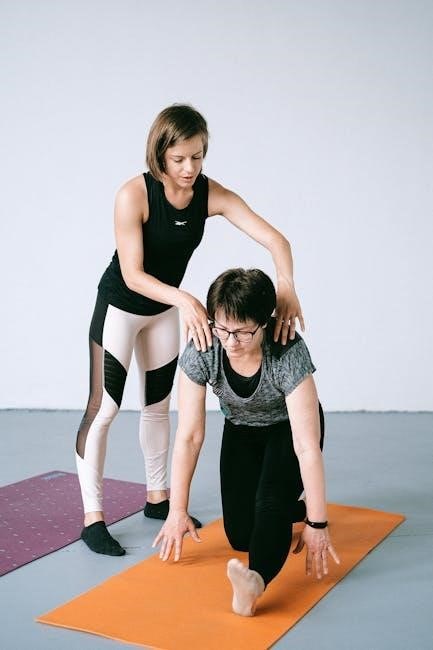
While explosive workout program PDFs can be a useful starting point, consulting with a qualified fitness professional is highly recommended. A trainer can assess your individual needs, movement patterns, and fitness level to create a personalized program.
They can ensure proper exercise technique, minimizing the risk of injury – particularly crucial with high-impact plyometrics. A professional can also help you integrate explosive training with other aspects of your fitness regime, like hypertrophy work, avoiding overtraining. They’ll monitor your progress and adjust the program accordingly, maximizing results. Don’t hesitate to seek expert guidance for optimal safety and effectiveness.